

Toddler teeth issues
Common toddler teeth issues include teething, sucking thumbs and grinding teeth. These issues are a typical part of toddler development. If you’re concerned about your toddler’s teeth, see your dentist.
Common toddler teeth issues include teething, sucking thumbs and grinding teeth. These issues are a typical part of toddler development. If you’re concerned about your toddler’s teeth, see your dentist.
Brushing children’s teeth: in pictures
About children’s teeth
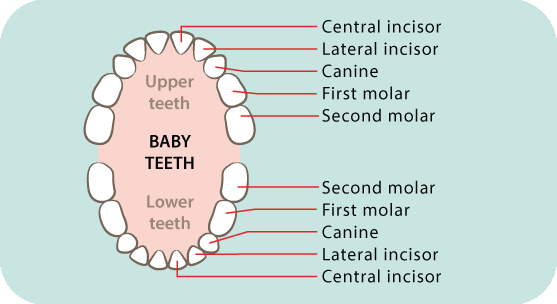 Baby teeth
About children’s teeth
Baby teeth
Stimulating socio - emotional development: 13 - 18 months
"Communication with close people expands, there are more diverse joint activities and interactions during daily activities and play. The child is happy to engage in active exploration. He expresses his desires. Frustrations are inevitable, and with them stronger emotional reactions and protests. You are here to understand and help."
"Communication with close people expands, there are more diverse joint activities and interactions during daily activities and play. The child is happy to engage in active exploration. He expresses his desires. Frustrations are inevitable, and with them stronger emotional reactions and protests. You are here to understand and help."
Routine health check-up: at 18 months of age
Routine preventive baby check-ups at this age include a screening of growth, development (with re-application of the development assessment questionnaires) and of your child's health. The planned revaccination will be performed and recommendations for the further successful progress of the child will be given.
Routine preventive baby check-ups at this age include a screening of growth, development (with re-application of the development assessment questionnaires) and of your child's health. The planned revaccination will be performed and recommendations for the further successful progress of the child will be given.
Early detection of metabolic disorders in newborns
Most newborns are healthy. However, a number of children are born with congenital diseases that can be treated successfully if detected in time.
Most newborns are healthy. However, a number of children are born with congenital diseases that can be treated successfully if detected in time.
Newborn wind and burping: in pictures
Burping newborns: the basics
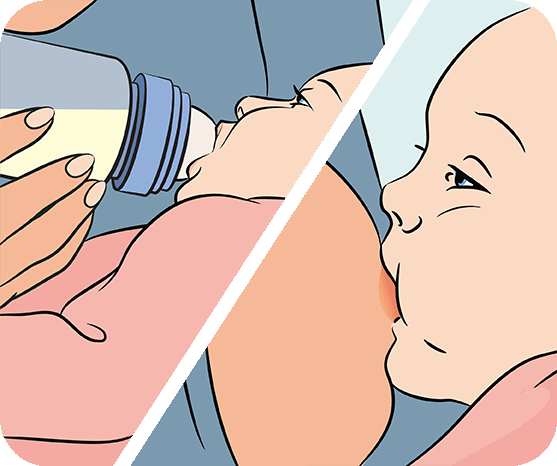 New
NewBurping newborns: the basics
New
Optimal infant nutrition from 10 to 12 months
If you offer your child a large selection of healthy and quality foods from the beginning, it is a sure way for him/her to adopt healthy eating habits that will accompany him/her throughout the life. Nutrition and feeding are far more than nutrient intake; it is an opportunity to support many aspects of a child's development.
If you offer your child a large selection of healthy and quality foods from the beginning, it is a sure way for him/her to adopt healthy eating habits that will accompany him/her throughout the life. Nutrition and feeding are far more than nutrient intake; it is an opportunity to support many aspects of a child's development.
A child did not gain weight: from 6 to 24 months
"A healthy child who eats well should progress in weight every month. If your child has not progressed enough since the previous measurement, it is necessary to react quickly to discover the cause of the problem. Sometimes you can find a solution yourself, and sometimes you need to turn to the doctor. "
"A healthy child who eats well should progress in weight every month. If your child has not progressed enough since the previous measurement, it is necessary to react quickly to discover the cause of the problem. Sometimes you can find a solution yourself, and sometimes you need to turn to the doctor. "
Messy eating
Messy eating is a normal part of children’s development.Messy eating develops fine motor skills and helps children learn about food and their world.Be patient, praise tidy eating, and use plastic or newspaper under your child’s highchair.
Messy eating is a normal part of children’s development.Messy eating develops fine motor skills and helps children learn about food and their world.Be patient, praise tidy eating, and use plastic or newspaper under your child’s highchair.
Dietary guidelines in pictures: children 4-8 years
Children need a wide variety of healthy foods from each of the five food groups to grow and develop in a healthy manner. How much food children need depends on body size and activity levels.
Children need a wide variety of healthy foods from each of the five food groups to grow and develop in a healthy manner. How much food children need depends on body size and activity levels.